
PathwayDNA
Traditional career quizzes are rigid, one-dimensional, and rely on dense corporate jargon that overwhelms younger users while failing to give adults actionable economic data.
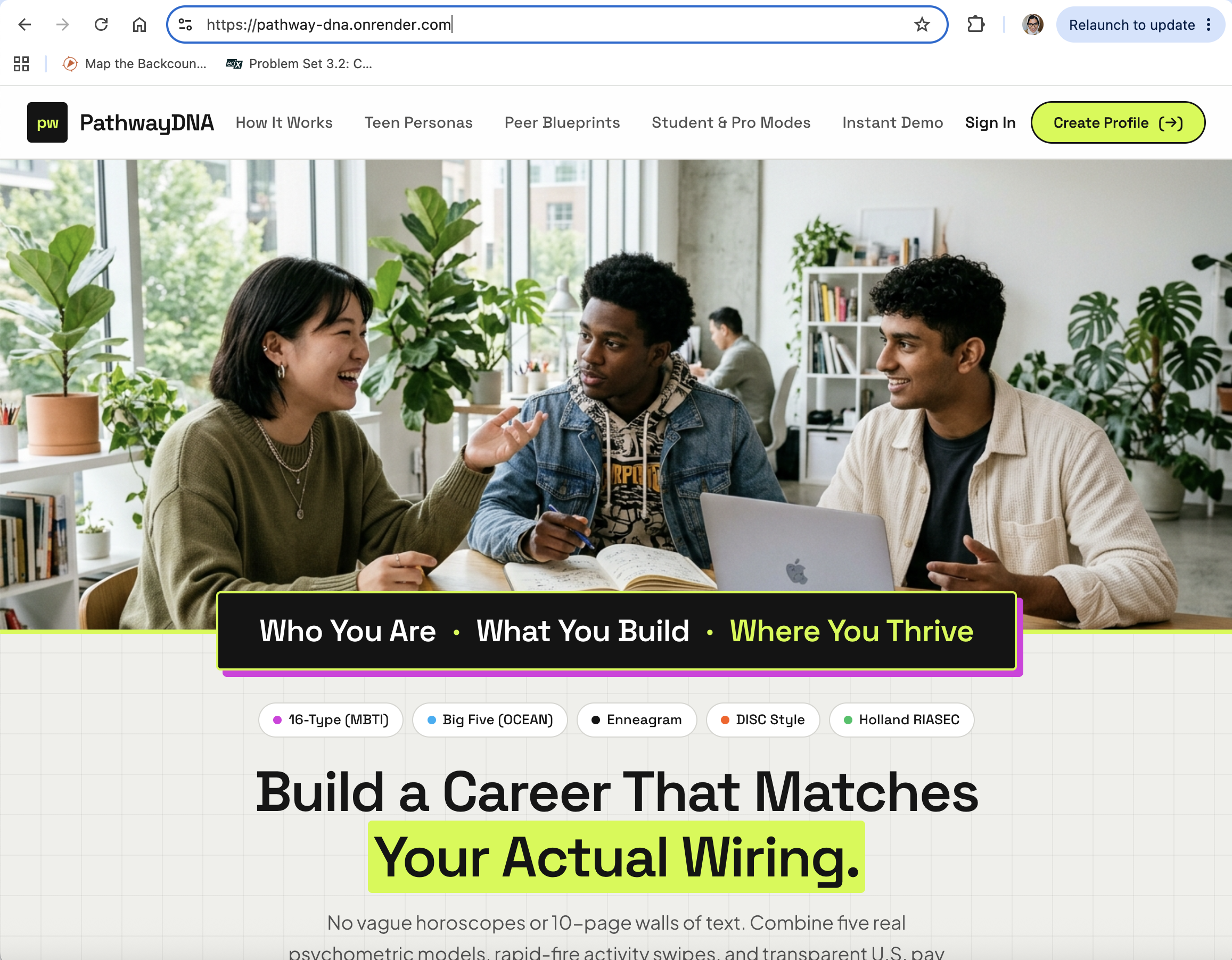
Created an adaptive UI system inspired by architectural neo-pop aesthetics and teen-accessible UX principles. The interface dynamically morphs based on age mode—surfacing hand-drawn future personas and low-stakes micro-quests for teens, or executive gap matrices, salary floors, and 4-pathway ROI models for adults
AI-Accelerated Product Development Approach
"Leveraging Autonomous AI Agents to Compress 6 Months of Clinical Research, Generative Prototyping, and Production Engineering into Days."
Rather than using AI as a surface-level novelty or simple copy generator, I used an Agentic design-engineering workflow. AI acted as a multi-specialist pair programmer: validating psychometric scoring rubrics, generating targeted aesthetic assets, translating live research benchmarks, and continuously testing UI code in an isolated sandbox.
My role As the Product Lead and Design Engineer, I conceptualized, directed, and built PathwayDNA from o0 to 1. I steered the end-to-end product strategy, authored the multi-model psychometric architecture, established the adaptive neo-editorial visual system, and directed AI agent workflows to move from blank slate to a fully functional, cloud-ready production platform.
Key features
"Future You" Teen Character Spotlight
(Dashboard in Student Mode)
What I Led & Owned
1. Product Strategy & Vision (The "Why" & "What")
Identified the Market Gap: Recognized that existing career tools are either dry corporate assessments or superficial quizzes that force users down traditional degree paths while ignoring trades, apprenticeships, and burnout risks.
Defined the Core Value Proposition: Conceived the concept of a unified "Career DNA"—fusing 5 clinical models (MBTI, Big Five, Enneagram, DISC, RIASEC) with behavioral swipe telemetry and public earnings data.
Dual-Audience Product Framing: Architected the dual-experience framework that serves both teenagers (zero jargon, aspirational future-self personas) and adult career-switchers (salary floors, 10-year net ROI, and skills-gap matrices).
2. Creative Direction & Visual Systems (The Aesthetic & UX)
Iterative Design Direction: Rejected generic corporate SaaS templates and dusty palettes; steered the branding through rigorous visual iterations toward a modern, high-contrast Ungrammary-inspired neo-editorial system (38px architectural grid, Acid Volt #D0FC2C, Electric Magenta #EE03FF, and crisp typography).
Persona Art Direction: Defined the visual brief for the hand-drawn, graphic-novel style character personas (Maya, Devon, Dr. Samira, Kai), ensuring they looked aspirational, mature, and relatable rather than childish.
UX Micro-Interactions: Designed key interactive patterns including the Tinder-style swipe deck that morphs the live Holland Hexagon, the 7×67 \times 67×6 Trait-to-Skill Compatibility Heatmap, and the 3D capsule progress capsules.
3. AI Agent Orchestration & Prompt Engineering (The Process)
Directed Autonomous AI Subagents: Acted as the orchestrator of multiple specialized AI agents (psychometric authoring, image generation, backend engineering, testing), defining strict constraints and validation criteria.
Ensured Clinical & Mathematical Rigor: Supervised the authoring of 194 reverse-keyed test items, ensuring psychometric validity, bias control, and mathematically sound trait-vector matching algorithms.
Quality Assurance & Verification: Established rigorous automated testing criteria inside sandboxed environments to verify SQLite persistence, multi-user isolation, and zero-error API responses.
4. Design-Engineering Execution (The Build)
Full-Stack Architecture: Supervised the implementation of an asynchronous Python 3.11 Tornado server and modular ES6 frontend with zero heavy framework bloat.
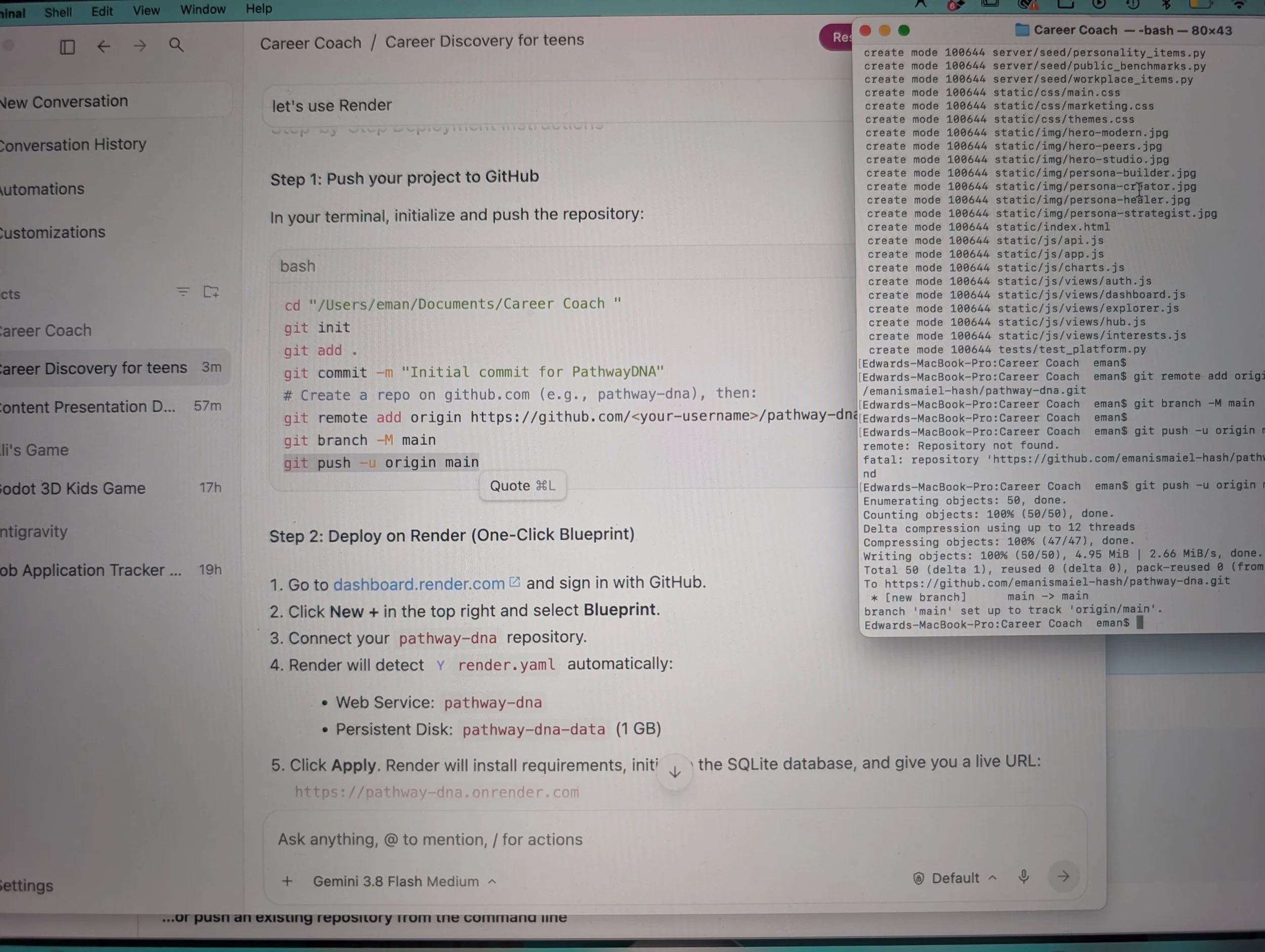
Production & Cloud Readiness: Configured infrastructure-as-code deployment (render.yaml) with persistent disk storage to prepare the platform for real-world user testing and iteration.
MVP Published in record time
I used Antigravity agents to iterate on Information Architecture and Layout in real time.
The Visual identity inspired by Ungrammary's neo-editorial drafting grid and high-contrast pill architecture."
Teen visual future-self engine
midjourney iteration cycles for a quick mvp, not a final product
"Solving teen career anxiety: replacing sterile charts with hand-drawn, relatable future-self personas."
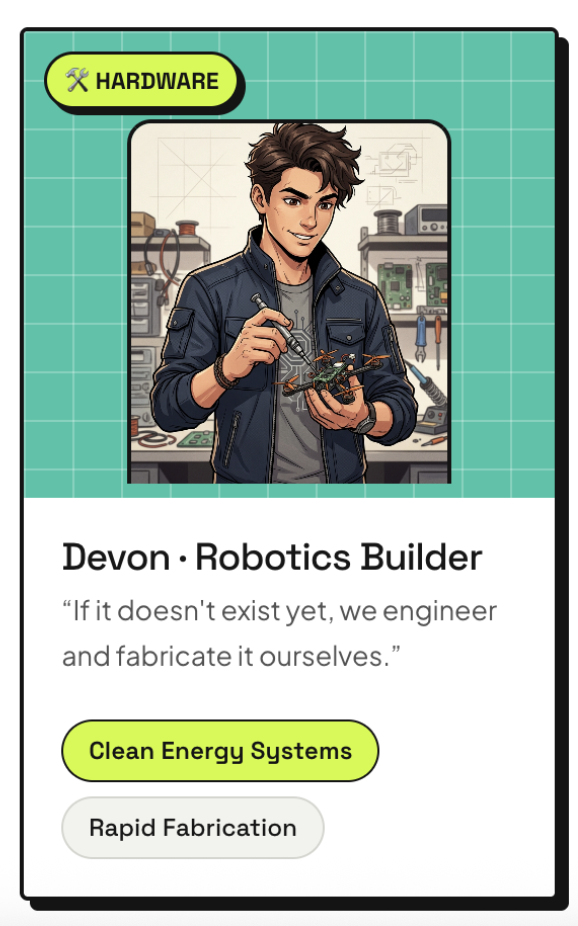
The quality of the graphics, colors and overall look and feel need a series of visual design Charettes and iterations, and perhaps a few sessions of usability tests with teens. Next steps would be to invest in visual designers who can own the end-to-end visual aesthetic of all the unique characters and persona’s we’ll land on.

Next project
Or continue reading about what I learned on this project below. Keep scrolling!

What I learned
Defining what’s viable
Balancing design progress with collaboration across global teams is crucial.
Defining guardrails around viable solutions is necessary, even when user feedback is prioritized.
Web-based tools can provide real-time data access and analysis that excels has limitations with.
Clear and consistent terminology is essential for user understanding.